2026-04-08 · By Robert Katona
Best States to Manufacture in Mexico: A 2026 Guide.
Market Entry Readiness Diagnostic · 11 questions, about 3 minutes
Key takeaways
- Mexico is a set of regional economies, and the state you choose sets your labour, logistics, energy and incentive costs for the life of the operation.
- Nuevo León was Mexico's second-largest recipient of foreign direct investment in 2025 and in the first half of 2026, about 220 km from Port Laredo, the Western Hemisphere's leading land port.
- The Bajío concentrates automotive assembly, with GM, Honda, Mazda and Toyota in Guanajuato, and Querétaro's aerospace cluster of more than 80 companies.
- Monterrey's industrial vacancy has risen from under 2 percent in 2023 to 6.8 percent in mid-2026, with rents broadly flat, so incoming manufacturers have more space to choose from.
- Power capacity is decided substation by substation, so ask CFE for a written position on a named parcel before you commit.
Where you manufacture in Mexico sets your labour cost, logistics cost, power, incentives and distance to customers for as long as the plant runs. Mexico is a set of regional economies with distinct industrial profiles, and each one rewards a different kind of operation.
This guide covers the six regions where most foreign manufacturing lands, what each one is built for, and the factors that decide the choice. Figures were updated on 5 October 2026, and each one links to its source.
Nuevo León: the industrial north
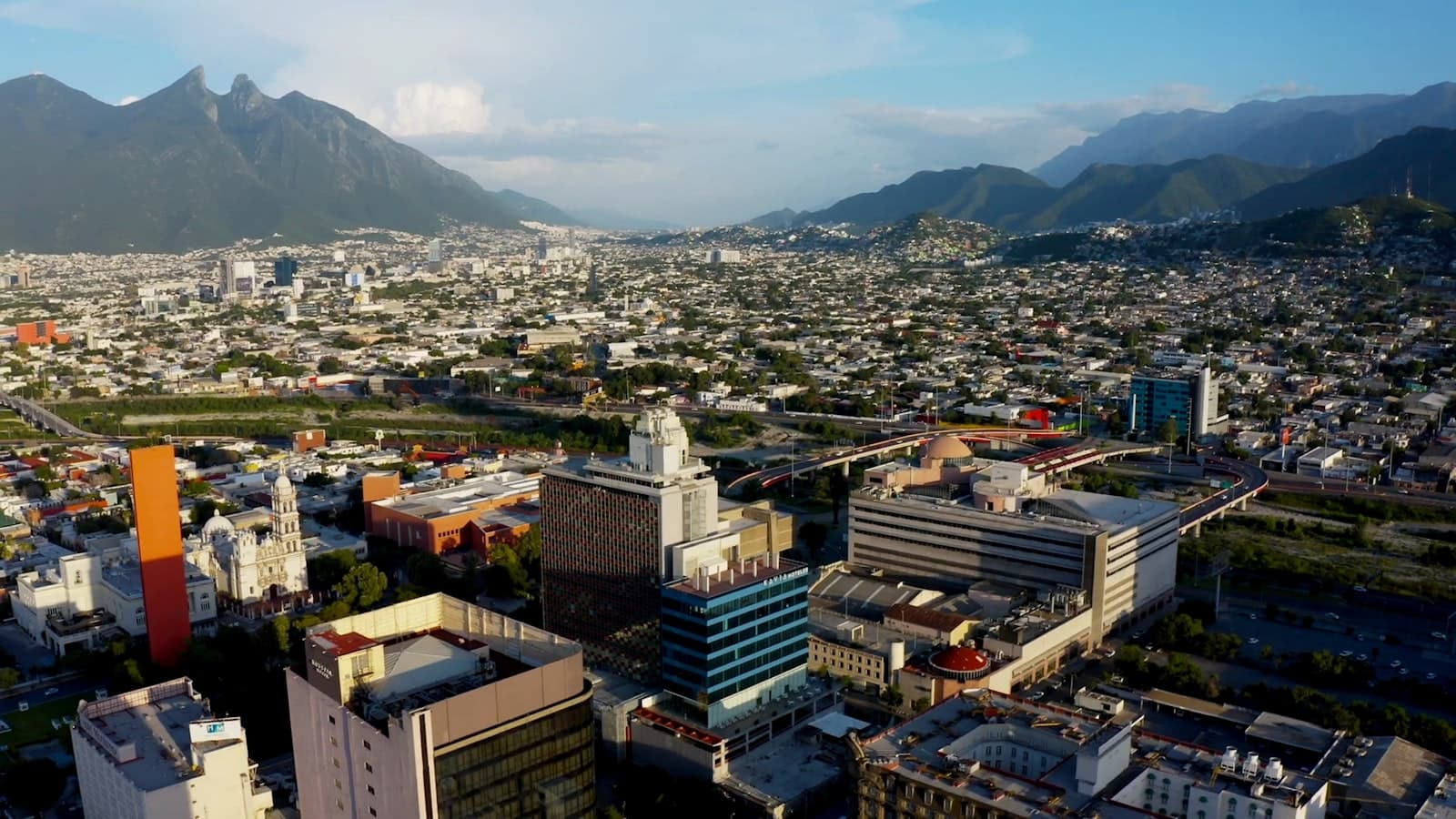
Monterrey and its metropolitan area are the centre of gravity for manufacturing in northern Mexico. Nuevo León received US$3.63 billion in foreign direct investment in 2025, second only to Mexico City, according to the Secretaría de Economía's report to Congress for 2025, and US$3.71 billion in the first half of 2026, again second, per the report for the second quarter. The industrial base runs from steel, glass and cement to appliances and auto parts, anchored by companies such as Ternium, CEMEX and Nemak.
Location does much of the work. Monterrey sits about 220 kilometres from the Nuevo Laredo crossing into Port Laredo, the Western Hemisphere's leading land port, which handled US$353.9 billion in trade in 2025. The metro area also has a deep bench of engineering talent, with Tecnológico de Monterrey, the UANL and a network of technical schools graduating people in automation, mechatronics and industrial engineering.
Space has opened up since 2023. Industrial vacancy in Monterrey, below 2 percent that year, stood at 6.8 percent in the second quarter of 2026, with average rents of about US$6.98 per square metre per month and broadly flat over the year, according to CBRE data reported by T21. Labour carries a premium: Tetakawi's September 2026 wage benchmark puts a fully fringed entry-level operator in Monterrey at US$7.00 to US$7.50 an hour, against US$5.56 nationally. For operations that need the border crossing, the supplier base and the engineering talent together, Monterrey remains the default.
Invest Monterrey publishes investment guides and makes introductions to industrial parks, utilities and local government.
Querétaro: aerospace and precision manufacturing
Querétaro is Mexico's aerospace hub, with more than 80 aerospace companies according to the state's economic development ministry, including Safran and Bombardier. The Universidad Aeronáutica en Querétaro (UNAQ) trains people specifically for the sector, from two-year technical degrees through engineering and graduate programmes.
Beyond aerospace, Querétaro sits in the Bajío corridor within a few hours' drive of the automotive plants in Guanajuato, San Luis Potosí and Aguascalientes, with modern industrial parks on the main highway and rail lines. Its population reached 2.6 million in INEGI's 2025 intercensal survey, large enough for a skilled manufacturing workforce at a smaller scale than Monterrey or Mexico City.
Guanajuato: the automotive heartland
Guanajuato is where Mexico's automotive assembly is densest. General Motors builds in Silao, Honda in Celaya, Mazda in Salamanca and Toyota in Apaseo el Grande, as the state's August 2026 sector overview sets out. Those assemblers have drawn hundreds of Tier 1 and Tier 2 suppliers into the state, and that supplier depth is what a new parts maker plugs into.
The state's industry grew while the country's contracted. Guanajuato's industrial activity rose 1.7 percent in 2025 as the national figure fell 1.3 percent, according to INEGI data published by the state. Guanajuato sizes each incentive package against a five-year business plan through its Invierte Gto office, as the state incentives guide explains.
Labour availability across the Bajío is strong, with a young population and technical schools aligned to manufacturing. Power is the variable to check. Rapid industrial growth has loaded parts of the regional grid, so confirm capacity for your specific parcel rather than relying on state averages.
Jalisco: electronics and technology
Guadalajara is Mexico's electronics and technology hub. Flex and Jabil manufacture there, Intel runs a design centre, and IBM and HP operate services and research campuses. That mix of contract manufacturing, design and software gives electronics, medical device and technology-adjacent manufacturers a deep supplier base and engineering talent pool.
Distance is the trade-off for road freight. Guadalajara is about 1,000 kilometres by road from the Nuevo Laredo crossing. Air freight from Guadalajara's international airport and rail connections close part of that gap, and for heavy or bulky goods the northern states keep the logistics advantage.
The northern border: the maquiladora base
Tamaulipas (Reynosa, Matamoros), Chihuahua (Ciudad Juárez) and Sonora (Hermosillo, Nogales) are the historic base of Mexico's maquiladora industry. They offer the shortest transit to the United States, with same-day delivery into Texas from Reynosa and into Arizona from Nogales. For just-in-time supply and speed to market, the border is hard to beat. Many first-time entrants start production here under a shelter provider and move to their own entity once volumes justify it.
Ciudad Juárez alone had 333 IMMEX plants in April 2026 and maquila employment of about 254,000 in June 2026, down from a peak of about 326,000 in June 2023, per INEGI figures reported by Norte Digital. That scale means labour is generally available, though competition among employers keeps turnover higher than in the interior.
Security conditions vary by city and by location within a city, so the assessment belongs at the site level, with local security advisers as part of due diligence.
Yucatán: the southeastern alternative
Mérida and the wider Yucatán Peninsula suit companies that do not need border proximity. Wages run below the national level: the IMSS average daily wage across all sectors in Yucatán was MXN 524.55 at the end of 2025, 16.5 percent below the national MXN 627.87, as reported by Por Esto. The state has invested in industrial parks and offers incentive packages for manufacturing.
The trade-off is distance. Mérida is more than 2,000 kilometres by road from Nuevo Laredo, and far from the central Mexican clusters. For operations serving the domestic market, or shipping by sea through the Port of Progreso, where APM Terminals Yucatán runs the container terminal, the location works. Yucatán fits light manufacturing, food processing and port-oriented operations, and is a weaker fit for heavy industry or automotive supply chains.
What decides the choice?
Labour availability and cost. Rates vary by state and by city. Monterrey and the border carry a premium, while the Bajío and the southeast run lower, with tighter pools for some specialized skills. The cost of doing business in Mexico breaks down state-level benchmarks.
Power capacity at the specific site. Capacity is decided substation by substation. Ask CFE for a written position on a named parcel, and see the Mexico vs China cost analysis for how energy fits the wider cost picture.
Industrial park quality. Modern parks offer build-to-suit options, shared utilities, security and administrative services. Older parks may lack power capacity or wastewater treatment. Visit before committing.
State incentives. Every state builds its package around payroll tax relief, training support and permitting, negotiated against your project. The state incentives guide covers what Mexico City, the State of Mexico, Nuevo León and Guanajuato publish, and how to compare offers across states.
Distance to suppliers and customers. If your customers or suppliers sit in one region, locating near them lowers logistics cost and shortens response times. Map your supply chain before you shortlist.
The bottom line
Nuevo León offers the border, the supplier base and more available space than in 2023, at a labour premium. The Bajío offers automotive and aerospace clusters with deep labour pools. Jalisco leads in electronics, the border states in transit time, and Yucatán in cost for operations that do not need the border.
The right state is the one that matches your sector, your supply chain and your delivery model, confirmed on a named parcel with power and incentives in writing. Site selection and incentives is how you get that comparison run across states, and the package that comes out of it.
Frequently asked questions
Which Mexican states attract the most foreign investment in 2026?
By total foreign direct investment, Mexico City, Nuevo León, the State of Mexico and Baja California led in 2025, and Jalisco joined them in the top five in the first half of 2026, according to the Secretaría de Economía. Mexico City's total partly reflects where companies register their headquarters, and the ministry does not publish manufacturing investment by state, so the depth of your sector's existing cluster is the better guide to where to build.
How much foreign direct investment is Mexico receiving in 2026?
The Secretaría de Economía reported US$23.6 billion for the first quarter of 2026, the highest first quarter on record, and US$34.97 billion for the first half, with manufacturing at 38.6 percent. Most of it is reinvested earnings from companies already operating in Mexico. Banxico has since revised the 2025 base upward, so year-over-year comparisons depend on which series you use.
Is the Bajío or the northern border better for manufacturing in Mexico?
It depends on your priority. The Bajío (Guanajuato, Querétaro, Aguascalientes) offers dense automotive and aerospace clusters and deep labour pools. The northern border states offer the shortest transit to the United States, with same-day delivery into Texas and Arizona. Match the region to your supply chain and delivery model rather than to a generic ranking.
What factors matter most when selecting a manufacturing site in Mexico?
Labour availability and cost, power capacity at the specific site, water, industrial park quality, state incentives, and distance to your suppliers and customers. Each varies by state, by city and by parcel, so the comparison holds up best when it is run on named sites rather than state averages.

Robert Katona is the founder of Calder & Vale, a cross-border advisory firm working across all of North America. He advises operators, investors, and institutions on market entry, partner selection, and growth strategy throughout the region.
Questions about your Mexico strategy?
if this raised questions, let's talk. thirty minutes, no pitch, just clarity on your next step.
Market Entry Readiness Diagnostic · 11 questions, about 3 minutes