2026-10-15 · By Robert Katona
Risks of Manufacturing in Mexico in 2026, Ranked by What Moves a Timeline
Key takeaways
- Power at the parcel is the risk most likely to move a Mexican plant's timeline. Once CENACE issues its connection order, CFE has 10 business days to sign and 72 hours to connect, but the network works come first, and SENER's own grid plan shows reinforcements arriving months to years after the date they were needed.
- Water rights are the second gate. Since the December 2025 water law reform, concessions can no longer be bought from another private party; they move only with the property, in a merger or split, or by inheritance. 286 of Mexico's 653 aquifers have no availability for new concessions.
- Permits are third. A federal environmental impact review applies only to listed industries and can run about 180 business days at worst; most assembly plants are reviewed by the state and the municipality, with no national clock.
- Customs onboarding, labor relations and security shape the first shipments, operating cost and the route more than the construction calendar. The US has filed 51 Rapid Response labor cases against Mexican facilities since 2021, most of them with an order suspending liquidation of that facility's US entries.
- Trade policy, the courts and the peso weigh on the go decision and the margin. The USMCA remains in force under annual joint reviews and expires in 2036 unless all three countries extend it; the October 2025 Amparo reform bars suspensions that would let a plant run without a required federal permit; the peso has ranged from 16.87 to 20.85 per dollar since January 2025.
Most of what can delay a Mexican plant is physical and procedural, and most of it is visible before you sign for a parcel: whether the grid can deliver the megawatts, whether the water rights exist, and which permits the activity needs. Customs onboarding, labor relations and security shape the first shipments and the operating cost. Trade policy, the courts and the peso weigh on the go decision and the margin, and they rarely move a construction calendar. The ranking below follows that order, and each risk ends with what a prepared company holds against it.
What follows draws on Mexico's electricity, water, environmental, labor and amparo laws as published in the Diario Oficial, SENER's 2025 to 2039 grid plan, CONAGUA, INEGI, USTR and the US State Department, checked on 15 October 2026. It describes the rules and the published evidence. Your counsel and engineers confirm how they apply to a given site.
The ranking
| Rank | Risk | What it can delay | What a prepared company holds |
|---|---|---|---|
| 1 | Power at the parcel | Start of production | A CFE feasibility answer and a works budget before the parcel is bought |
| 2 | Water rights | Whether the site works at all | A title that travels with the land, or a park that supplies water in writing |
| 3 | Permits | Construction and start-up | The list of federal, state and municipal permits for your activity, filed in order |
| 4 | Customs and tax onboarding | First shipments | IMMEX, the importer registry and a broker in place before the machines move |
| 5 | Labor relations | Operations and US customs liquidation | A legitimate collective contract and a plan for the 40-hour transition |
| 6 | Security | Route, site design, cost | Route planning and site security in the operating budget |
| 7 | Trade policy | The go decision | Every part number classified for USMCA origin and US tariffs |
| 8 | Courts and regulators | The cost of a mistake | Every federal permit in hand before operating |
| 9 | The peso | Margin | A peso budget with a range, not a point |
1. Power at the parcel
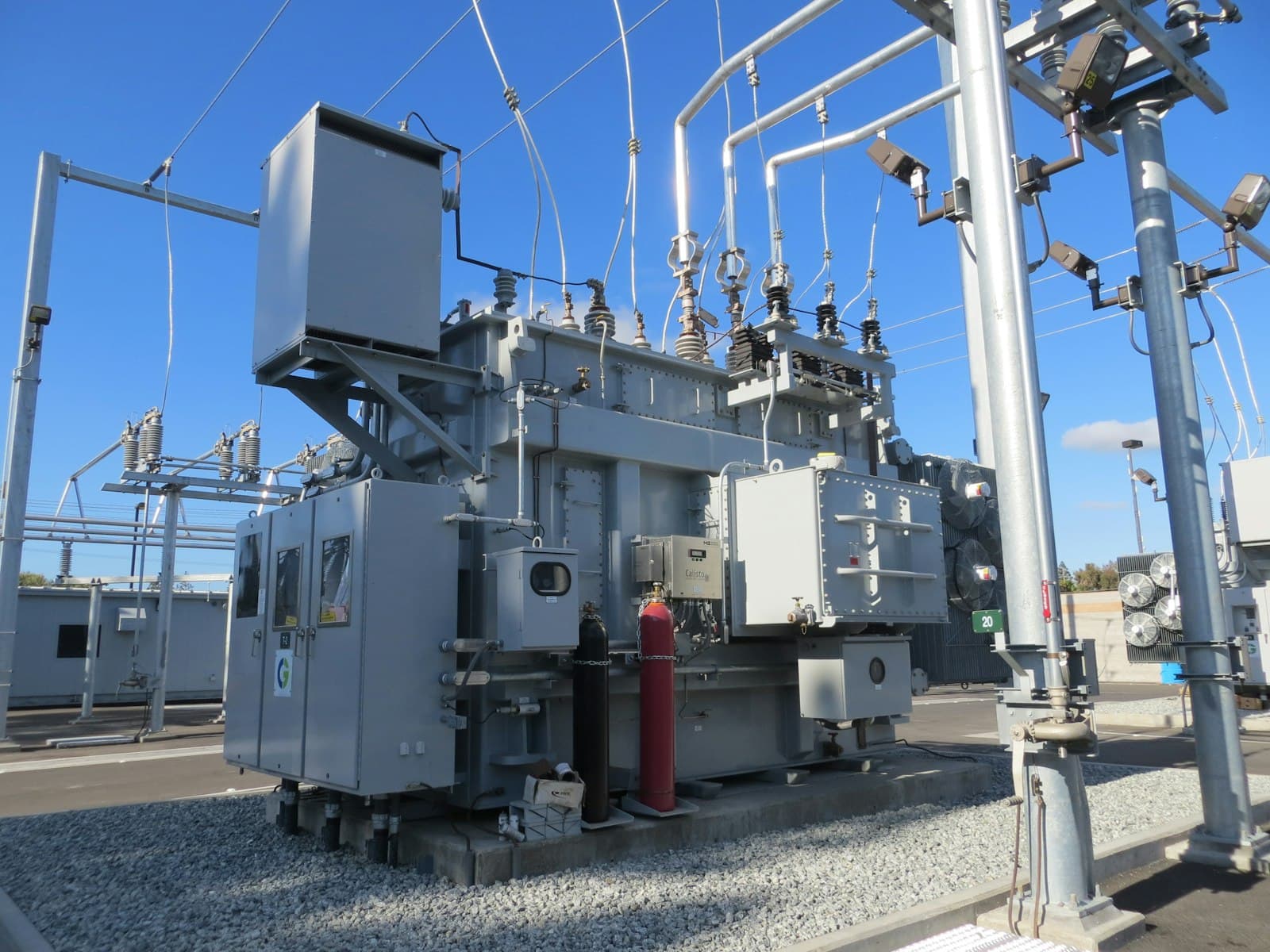
The Ley del Sector Eléctrico, a new law published on 18 March 2025, sets a short clock at the end of the process: once CENACE issues its order, the utility has "diez días hábiles" to sign the connection contract and "setenta y dos horas" to connect (LSE, Article 48). The time goes into what comes before the order: the studies and the network works. CFE lists 12 to 50 days to contract medium voltage, with network works outside that clock.
Who pays for the works is settled. The applicant either builds them at its own cost or pays an aportación that CENACE calculates, priced at "la solución técnica más económica" or at the utility's actual cost, and also carries land, rights of way, environmental and social-impact studies and fees (LSE Articles 49 and 50; LSE Regulation, Articles 128 and 134, DOF 3 October 2025).
Where capacity is tight is published. SENER's grid plan for 2025 to 2039 says the Las Mesas to Querétaro corridor "ha operado con valores cercanos a su límite de transmisión" and expects new technology loads to strain transformation in Querétaro and San Juan del Río. It names saturation in Ciudad Juárez "derivado por el fenómeno de relocalización de industrias," transformer overloads in Monterrey and saturated transformation at Tijuana's Panamericana Potencia substation (PLADESE, DOF 17 October 2025). The same plan's project table shows reinforcements arriving well after the date they were needed: the Tijuana transformer bank was needed in April 2021 with a CFE feasible completion date of October 2025, and the Las Delicias to Querétaro project was needed in April 2023 with a feasible date of June 2026.
On-site generation is an option with its own rules. Plants under 0.7 MW need no generation permit; interconnected self-supply between 0.7 and 20 MW can use a simplified permit route, with any surplus sold only to CFE (LSE Articles 19, 30 and 32). Generation of 0.7 MW or more also needs a social impact statement, which SENER resolves within 90 calendar days.
What a prepared company holds: the load profile and connection voltage defined before site selection, a written answer from CFE on feasibility and works for each shortlisted parcel, the aportación in the budget, and, in a park, the park's committed substation capacity in the lease. This is where state economic development offices and the park developer matter most, because they track which substations have room.
2. Water rights
The water law changed on 11 December 2025, when the DOF published a new Ley General de Aguas and a reform of the Ley de Aguas Nacionales. Concession rights "no serán objeto de transmisión," and the old transfer articles are repealed (LAN, Article 22). In their place, CONAGUA reassigns the same volume, use and remaining term when the property tied to a concession is sold, in a merger or split, or by inheritance, within 20 business days (Article 37 BIS 1, in force from about June 2026). A committee of federal ministries, which the law tells to favor the human right to water, food security and national development, approves certain reassignments (Article 37 BIS 2); which ones depends on a cross-reference in the text that counsel will want to confirm.
A new concession depends on availability. CONAGUA must answer within 60 business days of a complete file, and 286 of the country's 653 aquifers have no availability (National Water Program 2026 to 2030). By our count of CONAGUA's aquifer tables, 7 of Querétaro's 11 aquifers, 13 of Guanajuato's 18 and 38 of Chihuahua's 61 show negative availability; Silao-Romita in Guanajuato is positive (CONAGUA SIGA). The national program names localities in Aguascalientes, Guanajuato, Baja California, Nuevo León and Querétaro among those facing supply difficulties from population and industrial growth.
What a prepared company holds: the water volume the process needs, confirmed before the site is chosen; for a park, the park's title, volume and supply commitment in writing; for a standalone parcel, a concession tied to the land, with counsel's view on reassignment.
3. Permits
Land use and construction licences are municipal powers under Article 115 of the Constitution, and no national law sets their timeline. A federal environmental impact review by SEMARNAT applies only to listed industries, among them chemical, petrochemical, steel, paper, cement and power, and to industrial parks with highly risky activities (LGEEPA, Article 28). Its clock is 60 business days, an information request can suspend it for up to 60 more, and complex projects can take 60 beyond that: about 180 business days at the outside.
Most assembly plants are assessed by the state, and the review can run inside the municipal land-use or construction procedure (Article 35 BIS 2). Automotive and metallurgical plants, along with chemical, paint, glass and cement, also need a federal operating authorization for air emissions, the basis of the Licencia Ambiental Única (Article 111 BIS).
What a prepared company holds: the full permit list for the activity at federal, state and municipal level, filed in sequence, and a clear answer from the park on which authorizations its own permits already cover.
4. Customs and tax onboarding
This risk moves the first shipments more than the building. A customs law reform published on 19 November 2025 took effect on 1 January 2026 (Ley Aduanera). USTR reports that the new rules "impose strict liability on customs brokers" and that "a significant number of Mexican customs brokers have been suspended in the past year" (National Trade Estimate 2026). In 2026 the Secretaría de Economía suspended 441 IMMEX programs for a missing annual report and cancelled 189 of them from 1 September (DOF, 30 June and 29 September 2026). The SAT's 2026 audit plan focuses on companies that show "inconsistencias entre lo que importan o compran y lo que venden" and on those that pay a lower effective rate than their sector.
Tax structure carries its own exposure. Under Article 183 of the income tax law, a foreign company that runs a maquila through an unrelated shelter (albergue) has no permanent establishment in Mexico, but it registers with the SAT and owes safe-harbor income tax from the first day; our transfer pricing and safe harbor guide covers the arithmetic.
What a prepared company holds: the IMMEX program, the importer registry and a vetted broker in place before machinery crosses, inventory control that reconciles imports with exports, and the IMMEX VAT certification if the volume justifies it.
5. Labor relations
The USMCA's Rapid Response Labor Mechanism lets the United States challenge a specific Mexican facility. USTR lists 51 requests for review from May 2021 to 13 October 2026, mostly in auto parts and tires, and most came with a letter directing US Customs to suspend liquidation of that facility's entries (USTR). Collective contracts that workers did not ratify by vote were terminated on 2 May 2023, and staffing subcontracting has been banned since April 2021, with specialized services allowed only through registered contractors (LFT Articles 12 to 15).
The workweek falls from 48 to 46 hours on 1 January 2027 and to 40 in 2030, with no cut in pay; our 40-hour week guide carries the schedule and the overtime rules.
What a prepared company holds: a collective contract the workforce has actually approved, or none until one is, shift patterns built for 46 hours from day one, and contractors checked against the registry.
6. Security on the route
The US State Department rates Mexico Level 2 nationally and sets levels by state, noting that conditions "can vary widely from state to state and even within a state" (advisory of 28 May 2026). INEGI's 2024 business victimization survey found that 27.2 percent of businesses were victims of a crime in 2023, with extortion, theft of goods and petty theft making up 58.8 percent of crimes; the average cost per business was 54,451 pesos at 2018 prices, and 98,654 pesos in industry (INEGI ENVE 2024). INEGI's state figures do not line up with reputations, so the useful question is specific to your site and route.
Logistics is the exposed activity: 52.2 percent of businesses felt insecure moving goods on highways. Cargo theft fell 21.5 percent in 2025 on SESNSP data, led by the State of Mexico and Puebla (Mexico Business News); in the second quarter of 2026 the State of Mexico, Puebla and Guanajuato accounted for 46.7 percent of thefts tracked by the security firm Overhaul (Overhaul). The State Department's investment statement cites AmCham Mexico's finding that security costs businesses up to 5 percent of operating budgets (2025 Investment Climate Statement).
What a prepared company holds: a route plan for inbound and outbound freight, site security designed into the plant, and a security line in the operating budget from the first model.
7. Trade policy
On 1 July 2026 the United States did not renew the USMCA, and the agreement "remains in force" under annual joint reviews, expiring in 2036 unless all three countries extend it (USTR). USTR is taking comments for the 2027 review until 12 January 2027. US tariffs set what each product pays at the border: USMCA-qualifying goods entered duty-free under the agreement pass without the 10 percent Section 301 duty, and Section 232 applies by sector. Our note on the July outcome and Mexico vs US cost comparison cover both.
What a prepared company holds: every part number classified for USMCA origin, Section 232 and Section 301 before the site decision, and a supply chain that keeps origin with room to spare.
8. Courts and regulators
The 2024 constitutional reform moved federal judges to popular election; the first vote was held in June 2025, and the second has been set for June 2028 (DOF, 2 June 2026). COFECE and IFT were replaced by the Comisión Nacional Antimonopolio and a telecommunications regulator within the executive, and the energy regulators by the Comisión Nacional de Energía under SENER. The State Department's investment statement says the judicial changes "may further impact the legal landscape for foreign investors, by affecting the predictability and impartiality of judicial decisions."
The October 2025 Amparo Law reform matters most to operations. Judges now presume that a suspension harms the social interest when it would let a company keep operating an activity that needs a federal permit, authorization or concession "cuando no se cuente con la misma" (Ley de Amparo, Article 129). A court order is no longer a bridge across a missing permit.
What a prepared company holds: every federal permit in hand before operating, contracts with clear dispute-resolution clauses, and counsel who practices before the new courts.
9. The peso
The FIX rate published in the DOF ranged from 20.85 pesos per dollar on 5 March 2025 to 16.87 on 7 September 2026, and stood at 18.49 on 15 October 2026, a move of about 9.6 percent in five weeks (DOF). Wages, local services and taxes are paid in pesos.
What a prepared company holds: a peso cost base modelled across a range, and a view on how much of it to hedge.
Market Entry Readiness Diagnostic · 11 questions, about 3 minutes
The bottom line
The risks that decide when a Mexican plant starts are power, water and permits, and all three can be answered parcel by parcel before a lease or purchase is signed. Customs onboarding, labor relations and security set the pace of the first year and the operating budget. Trade policy, the courts and the peso belong in the board's decision and the margin model. A company that asks the first three questions early, through the state, the park and CFE, sets its own calendar.
Frequently asked questions
What are the biggest risks of manufacturing in Mexico in 2026?
Ranked by how much they can move a plant's timeline: power capacity at the site, water rights in aquifers with no availability, environmental and municipal permits, then customs and tax onboarding, labor relations, security on the route, trade policy, the courts and regulators, and the exchange rate. The first three decide when a plant can start; the rest mostly shape cost and the go decision.
How long does it take to get power connected to a new plant in Mexico?
The Ley del Sector Eléctrico gives the utility 10 business days to sign the connection contract and 72 hours to connect once CENACE issues its order (Article 48). The time goes into the studies and network works before that order. CFE lists 12 to 50 days to contract medium voltage, with network works outside that clock, and SENER's 2025 to 2039 grid plan shows reinforcements in Tijuana and Querétaro with feasible dates three to four and a half years after the date they were needed, and a Juárez transformer bank needed in April 2026 not yet tendered.
Can a company buy water rights for a plant in Mexico?
Not from another private party since the reform published on 11 December 2025: Article 22 of the Ley de Aguas Nacionales now states that concession rights 'no serán objeto de transmisión.' CONAGUA can reassign the same volume, use and remaining term when the property tied to the concession is sold, in a merger or split, or by inheritance, within 20 business days (in force since about June 2026); whether a federal committee must approve these cases turns on a cross-reference counsel will want to confirm. A new concession depends on aquifer availability, and 286 of 653 aquifers have none.
Do manufacturing plants in Mexico need a federal environmental impact assessment?
Only listed industries, among them chemical, petrochemical, steel, paper, cement and power generation, and industrial parks with highly risky activities (LGEEPA Article 28). The federal clock is 60 business days, extendable by up to 60 for information requests and 60 more for complex projects. Most assembly plants are assessed by the state, often inside the municipal land-use and construction procedure. Automotive and metallurgical plants also need a federal air-emissions authorization.
What are the political risks of doing business in Mexico in 2026?
Three are on most boards' lists: the USMCA, which remains in force under annual joint reviews after the United States declined to renew it on 1 July 2026, and expires in 2036 unless extended; the 2024 judicial reform, which moved to elected judges and whose second election is set for June 2028; and the replacement of autonomous regulators such as COFECE and IFT by agencies closer to the executive. They weigh on the investment decision more than on a construction schedule.
Is it safe to build a plant in Mexico?
Security varies by state and by route. The US State Department rates Mexico Level 2 nationally and notes that conditions 'can vary widely from state to state and even within a state.' INEGI's 2024 business survey found 27.2 percent of businesses were victims of a crime in 2023, with extortion the most common. Cargo theft fell 21.5 percent in 2025 on SESNSP data, led by the State of Mexico and Puebla, and in the second quarter of 2026 those two states and Guanajuato accounted for 46.7 percent of thefts tracked by the security firm Overhaul, so route planning and site security belong in the operating budget.
What is the USMCA Rapid Response Labor Mechanism?
A USMCA procedure that lets the United States challenge denial of workers' rights at a specific Mexican facility. USTR lists 51 requests for review from May 2021 to 13 October 2026, mostly in auto parts and tires. Most come with a letter directing US Customs to suspend liquidation of that facility's entries until the case is resolved.
How much has the Mexican peso moved since 2025?
The FIX rate published in the DOF ranged from 20.85 pesos per dollar on 5 March 2025 to 16.87 on 7 September 2026, and stood at 18.49 on 15 October 2026, a move of about 9.6 percent in five weeks. Wages, local services and taxes are paid in pesos, so the rate moves the dollar cost of a plant even when nothing else changes.

Robert Katona is the founder of Calder & Vale, a cross-border advisory firm working across all of North America. He advises operators, investors, and institutions on market entry, partner selection, and growth strategy throughout the region.
Questions about your Mexico strategy?
if this raised questions, let's talk. thirty minutes, no pitch, just clarity on your next step.
For US and Canadian manufacturers deciding where and how to produce in Mexico.
Book a complimentary 30-minute callMarket Entry Readiness Diagnostic · 11 questions, about 3 minutes
Provide services to manufacturers entering Mexico? Introduce your firm