2026-06-15 · By Robert Katona
Inflation Back in the Band: The Macro Case for Waiting on Mexico Just Lost Its Strongest Pillar
Market Entry Readiness Diagnostic · 11 questions, about 3 minutes
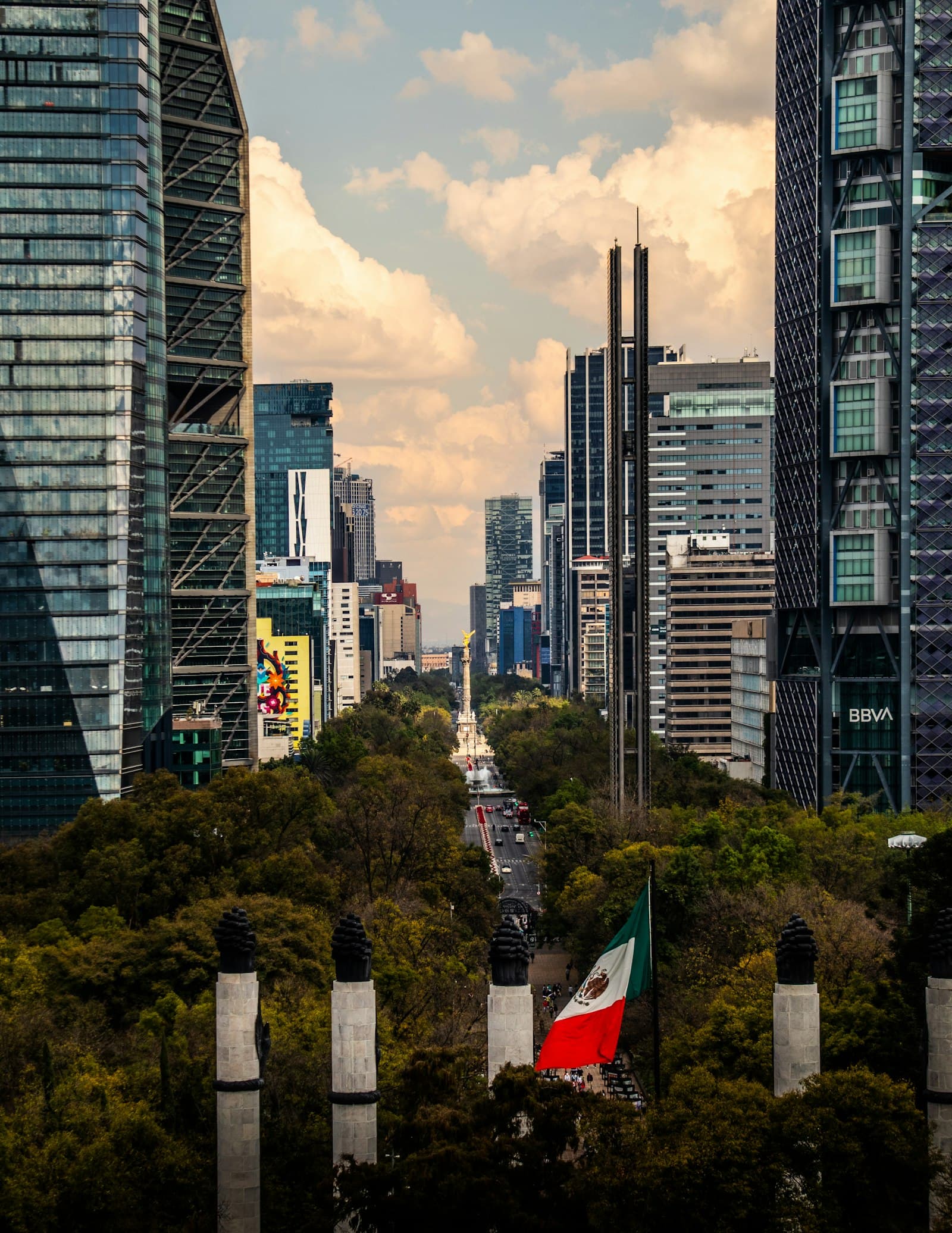
For most of the first half of 2026, the case for waiting on a Mexico decision rested on two numbers sitting next to each other. The economy had contracted 0.8 percent in the first quarter, the worst start to a year since 2020, and inflation had run above the central bank's target for months. Together they gave a cautious operator a defensible reason to hold: the macro is volatile, wait for it to settle. That pairing came apart this month. On the data released for May, Mexico's headline inflation eased to 3.94 percent, back inside the Bank of Mexico's tolerance band of three percent plus or minus one for the first time in four months, down from 4.45 percent in April and under the 4.02 percent the market expected.
That single print does more work than it looks like it should. It does not change the GDP number, and it does not resolve the trade file. What it does is remove the cleaner half of the wait-and-see argument. The macro-volatility objection was never really about growth. It was about predictability, and predictability is exactly what a disinflation print inside the band restores.
What the data says
The May reading is not a one-off soft number floating on its own. It sits on top of a policy backdrop that has been moving in the same direction. The Bank of Mexico cut its benchmark rate to 6.50 percent on May 7, its lowest level since April 2022, and signaled that the easing cycle it began in March 2024 has likely concluded. The decision was a close 3-to-2 split, which matters: it tells you the bank is parking the rate, not preparing to chase inflation back up. For an operator building an entry model, a parked policy rate is worth more than a falling one, because it gives a stable cost-of-capital number to underwrite against rather than a moving target.
The components reinforce the read. Core goods inflation ran 3.78 percent, services 4.57 percent, and energy a muted 3.27 percent, the last held down by fuel tax credits and price caps. Services running hotter than goods is the normal late-cycle pattern, not a warning sign. The peso, for its part, has held firm in the low-17s against the dollar through the period, supported by a carry differential that a parked Banxico keeps intact. The currency that was supposed to be a reason to wait has instead been one of the steadier variables in the picture.
Set against the contraction, the more useful number is where capital actually went. Mexico drew a record US$23.6 billion in foreign direct investment in the first quarter, the same quarter GDP shrank, and climbed from 25th to 19th in Kearney's FDI Confidence Index. Capital entered through the soft patch, not after it. That divergence, weak headline growth against record investment, is the signal worth weighting. Retail sentiment lags. Committed capital does not.
What the precedent shows
Operators who have entered Mexico across cycles know the pattern: the best terms are available when the consensus is still cautious. The cost of optionality, partner attention, advisor bandwidth, distributor and site capacity, falls when the market is not bidding for it. When sentiment turns and the headlines go uniformly positive, those same inputs reprice upward and the window of favorable terms closes. The disinflation print is an early marker that the cautious consensus is starting to crack, which means the terms available now are closer to the bottom of the range than the top.
This is also why the macro story should be read alongside, not instead of, the policy story. The Sheinbaum administration's Plan México framework and the subsequent regulatory simplification, including the COFEPRIS procedural cuts for regulated categories, were the government's response to exactly the soft quarter that gave operators pause. The investment-promotion machinery is being built out while sentiment is cautious, which is the same divergence the FDI number shows from the capital side. The state is competing for the next cycle now, not waiting for confidence to return on its own.
None of this argues that the environment is risk-free. The USMCA review remains live and unresolved, and the trade file is the genuine source of uncertainty an entrant should be modeling. But that is the point. The macro volatility has resolved enough to take it off the list of reasons to wait, which leaves the trade question as the real variable, and the trade question is one preparation can address directly. It is not a reason to hold. It is a reason to do the work.
What disciplined operators do in the next 30 days
The move is not to decide. It is to re-run the model on June numbers so that a decision, when it comes, is a fast and well-grounded one. For a senior operator evaluating Mexico entry, that work falls into three categories.
First, refresh the financial model. Any entry model built in March or April is carrying stale assumptions on the policy rate, the FX path, and the inflation trajectory. Re-running it on a 6.50 percent parked rate, a peso in the low-17s, and inflation inside the band will change the landed cost and cost-of-doing-business picture materially. The number that looked marginal in April may not be marginal now.
Second, separate the resolved variables from the live one. The macro has stabilized enough to stop treating it as the gating risk. The trade and rules-of-origin question is the live variable, and it deserves dedicated, documented preparation rather than a blanket "wait until USMCA is clear" posture that no longer matches where the uncertainty actually sits.
Third, lock the entry architecture while terms are favorable. Entity structure, partner shortlisting, and site or distributor diligence are cheaper to do now, with the consensus still cautious, than they will be once the disinflation read becomes the dominant headline and the inputs reprice.
Closing view
At Calder & Vale we read the May print as a change in the burden of proof. For most of this year, the operator waiting on Mexico held the stronger position, because the macro could be cited as unsettled. That citation no longer holds. Inflation is back in the band, the policy rate is parked, the peso is firm, and capital posted a record quarter while GDP fell. The disciplined response is not to rush, but it is also not to wait on a stability that has, quietly, already arrived. Building what endures means arriving prepared.

Robert Katona is the founder of Calder & Vale, a cross-border advisory firm working across all of North America. He advises operators, investors, and institutions on market entry, partner selection, and growth strategy throughout the region.
Questions about your Mexico strategy?
if this raised questions, let's talk. thirty minutes, no pitch, just clarity on your next step.
Market Entry Readiness Diagnostic · 11 questions, about 3 minutes